
Industrial supplier website design in Dubai: prove the fit
A procurement manager lands on an industrial supplier’s website looking for one material specification and regional availability. Instead, they get a broad mission statement, a photo of a warehouse and a contact button. The useful details may exist somewhere in a PDF, an old product catalogue or somebody’s inbox, but the buyer cannot tell that from the page in front of them.
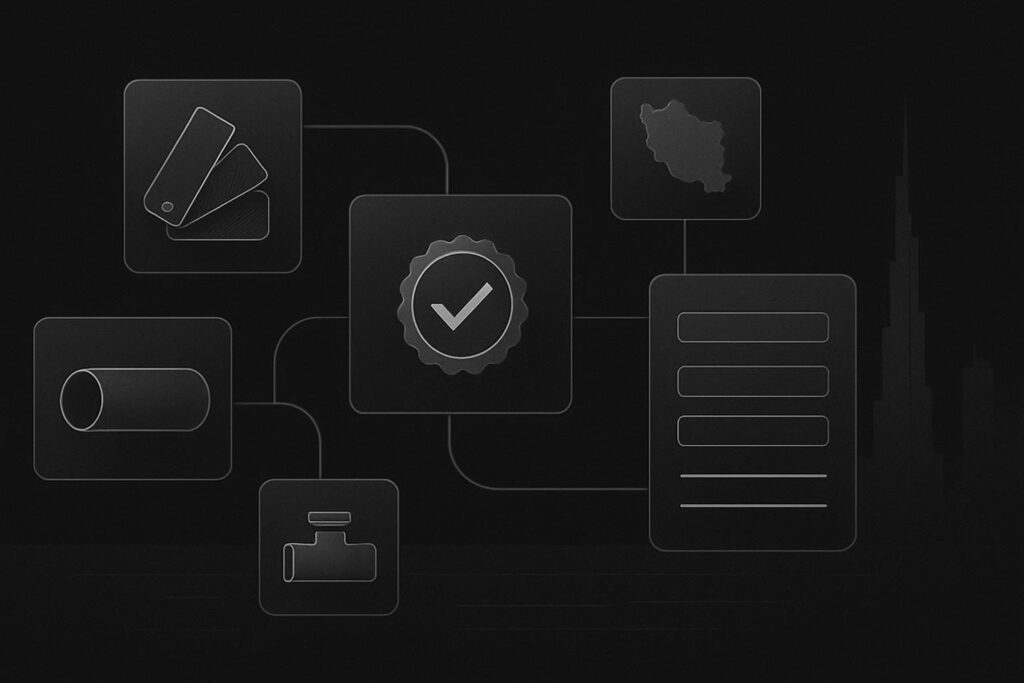
That is a fairly common failure in industrial supplier website design in Dubai. The site tells a company story when the visitor is trying to make a buying check. If they cannot establish whether the supplier is relevant, the enquiry either arrives vague and time-consuming, or does not arrive at all.
The first decision is whether the website sells a story or supports a check
An industrial buyer is rarely looking for a grand brand introduction first. They are trying to reduce uncertainty. Is this the right product family? Does it meet the material or operating requirement? Is there evidence behind the claim? Can the supplier cover the required location? Who can confirm the detail?
Website design in Dubai should reflect the job the website has to do. For an industrial supplier, that often means helping a buyer reach a sensible shortlist before they speak to sales, rather than making them excavate the site like a badly labelled parts cupboard.
Industrial supplier website design in Dubai should organise products, specifications, proof and request routes around the questions a procurement or technical buyer needs answered before requesting a quote. Product suitability, certifications, service coverage and availability claims should be clear, easy to locate and subject to client approval before publication. The aim is to make the next commercial conversation more informed, not to pretend the website can replace technical review.
Map the procurement route before choosing page layouts
The tempting assumption is that a capable buyer can infer suitability from a general company introduction. In practice, they may be comparing several suppliers under time pressure, often with a specification already on their desk. They need direct routes to relevant information.
Take a supplier of industrial valves, fittings or engineered components serving Dubai and the wider UAE. A procurement manager may need to confirm a particular alloy, pressure rating and regional supply arrangement before requesting a quote. A homepage that says the business provides quality solutions across multiple sectors does not move that task along.
Instead, trace a route such as this:
- The buyer identifies the relevant product family from the main navigation.
- They narrow the range by material, application, rating, dimensions or compatible system.
- They review supporting documents, certifications, manufacturer relationships or project-sector evidence where these claims have been signed off by the client.
- They check the geographic coverage, stock position wording or delivery process that applies to their requirement.
- They use a request route that carries the details sales needs to respond properly.
This is where a general enquiry form often lets everyone down. A form with name, email and message might technically work, but it leaves the sales team chasing the basics. A better request form can ask for product family, specification reference, quantity, delivery location and preferred contact method. Keep it proportionate, though. Nobody needs a twenty-field interrogation just to ask whether a product exists.
Build product families around how buyers search
Product organisation needs a commercial decision, not a pile of menu labels copied from a catalogue. Start with the categories buyers recognise, then make the routes between related ranges obvious. A visitor looking for stainless steel pipe fittings may also need compatible valves, flanges, seals or technical support. They should not need to start again from the homepage.
Give every important product page a technical job
A useful product-family page can include a short explanation of typical uses, the available variants, key material or performance fields, relevant documentation, common industries served and a specific request path. It does not need to publish every internal commercial detail. It does need to help a legitimate buyer decide whether contacting the supplier is worth their time.
Be careful with claims around stock, approvals, compliance, delivery times and geographic coverage. These can change, and they may be conditional. Get the client to approve the wording, identify an owner for updates and avoid making a broad claim because it sounds reassuring. A stale availability statement is worse than a clear route to confirm it.
There is also a very unglamorous operational point worth checking: document links. A certificate PDF may open on a desktop but fail on a mobile connection, point to an expired file, or be blocked by a permission setting inherited from an old hosting setup. Test the actual buyer path, including the form delivery to the right inbox. A success message only proves the page displayed one. It does not prove the enquiry reached the person who needs it.
Use proof where the buyer expects to find it
Trust signals for industrial suppliers are usually practical. They may include approved certifications, manufacturer authorisations, sectors served, technical expertise, project types, quality processes or clearly explained service coverage. The important bit is placement. A certification hidden in a generic about page has less value to a buyer reviewing a relevant product range.
Put proof close to the claim it supports, while keeping the wording accurate. If an approval applies only to a particular product line, say so. If coverage depends on the item, lead time or project requirements, say that too. There is no prize for sounding more certain than the operation can support.
Decide what belongs in the first version
Many supplier websites become muddled because every department wants its own page, brochure and history lesson in the first release. Page count alone tells you very little about the actual job involved. A site with ten pages can mean ten straightforward information pages, or ten separate templates with product filters, document libraries and complex enquiry logic.
Before approving a build, use a website design scope guide for Dubai projects to separate page quantity from content structure, templates, product data and technical requirements. Then use a practical website design brief for Dubai to record who the buyers are, what they need to verify and which pages should carry the commercial weight.
The sensible first version is usually the one that covers the product families producing the most meaningful enquiries, gives buyers enough specification detail to qualify themselves and provides a reliable path to request confirmation. The archive of older brochures can be dealt with later, once it has an owner and a reason to exist.
Industrial supplier website design in Dubai diagnostic checklist
- Can a buyer reach a relevant product family within a few clear choices from the homepage?
- Does each priority range show the specifications buyers routinely ask sales to confirm?
- Are material, certification, availability and coverage claims approved by the client and assigned to someone who can update them?
- Is proof placed near the relevant product or service claim rather than buried in a company profile?
- Does the request route collect enough context for sales to respond without a long round of follow-up?
- Have product documents, mobile layouts, form submissions and receiving inboxes been tested as a full route?
- Can the business explain which product pages matter most and why?
What the website cannot tell a buyer on its own
A website can make technical fit easier to assess, but it should not make decisions it cannot support. It cannot confirm a final specification, guarantee live stock, replace an engineer’s review or settle a project-specific delivery question. Those boundaries should be clear.
If the website currently hides the information buyers need behind a generic company story, do not begin by randomly adding more pages. Trace the actual buyer journey, the source of each technical claim and the system behind the enquiry route first.
Questions about industrial supplier website design in Dubai
How should a reader assess industrial supplier website design in Dubai?
Assess it from the buyer’s point of view. Choose a realistic product requirement and see whether a procurement manager can identify the product family, review useful specifications, find relevant proof, understand coverage and send a properly informed request. Visual polish matters, but it cannot compensate for a missing route to the facts.
Which specific inputs should an industrial supplier check?
Check product family names, specification fields, data-sheet ownership, certification wording, manufacturer approvals, sector evidence, service territories, availability language, enquiry routing and mobile document access. Also confirm who updates each area. Product information with no owner has a habit of becoming historical fiction.
When should an industrial supplier seek an individual assessment?
Seek an individual assessment when sales receives repeated basic questions that the website ought to answer, buyers struggle to find relevant ranges, product information is scattered across old files, or nobody is confident which claims are current. This is also sensible before rebuilding a site or sending paid traffic to an unclear product route.
Ask Standish Services to trace the problem and scope a practical fix.