
Website design for trades Liverpool that earns the referral
A homeowner in Woolton gets your name from a neighbour. They have a loft conversion, kitchen extension or roofing job in mind, so they check your website before picking up the phone.
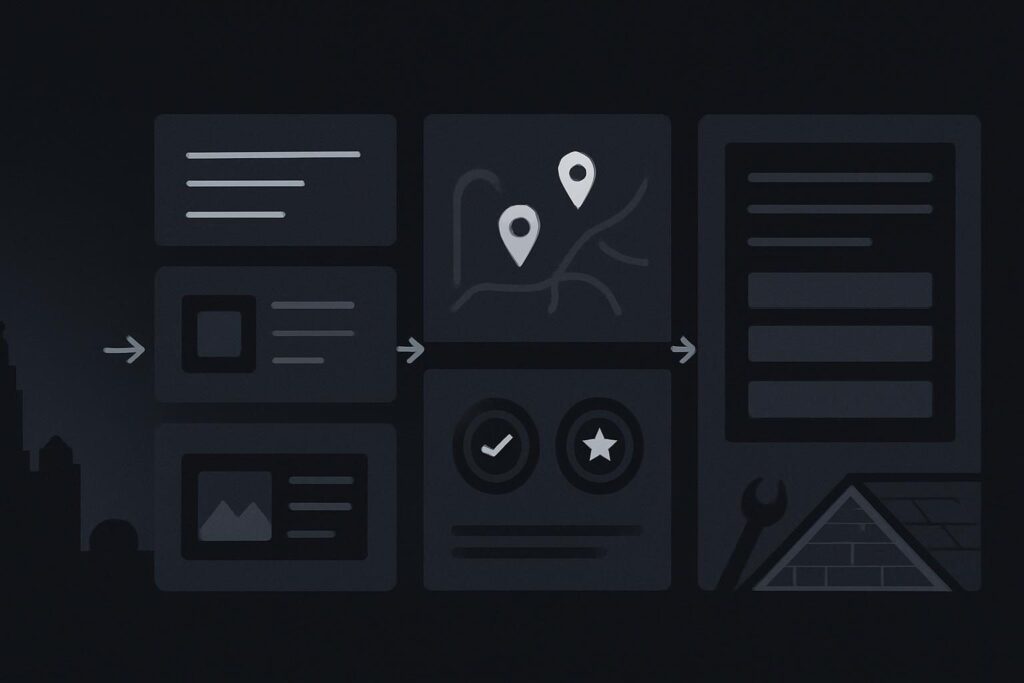
Then they hit the usual snag. The homepage says you are trusted and experienced, there is a phone number in the header, and a gallery shows a few finished jobs. But they cannot tell whether you cover their part of Liverpool, whether you take on that type of work, or what you need from them to price it properly.
A referral can get somebody through the door. A muddled website can still send them back out again.
The website has one job before the quote
For a Liverpool contractor, a good website should make it easy for a prospect to confirm four things: the work you do, the areas you cover, evidence that you have done comparable work, and the clearest route to request a quote. It does not need to be stuffed with sales copy or complicated features. It needs to answer the sensible questions before the visitor has to call.
This is the practical side of website design for Liverpool service businesses. The site should support the way enquiries actually happen, especially when someone arrives already half-convinced by a recommendation.
Follow the homeowner from service page to quote request
Take a contractor that handles extensions, renovations and structural alterations across Liverpool and parts of the wider Merseyside area. A homeowner has been referred for a rear extension in Crosby. They should not have to decode a vague homepage to work out whether the firm is relevant.
1. Start with the exact service
The first useful page is the service page, not a broad list headed services. A page about house extensions should state the kinds of extension considered, the typical stages of work handled, and the practical boundaries of the offer.
That could include single-storey rear extensions, side returns, structural opening work, renovation work alongside the build, or coordination with architects and building control where appropriate. It should also say if the business does not take on very small repairs, commercial work, or jobs outside its normal patch. Being clear saves everyone a pointless phone call.
Each service page needs a visible next action. A simple button such as Request a quote is fine, provided it leads somewhere that asks for useful information rather than a blank message box.
2. Confirm the service area without making people guess
Area coverage is often treated as an afterthought. It should be easy to find from the relevant service page and the main navigation.
A straightforward areas covered page can name Liverpool neighbourhoods and nearby locations served, while being honest about where travel depends on the job. Avoid trying to claim every postcode in the North West. It looks flimsy and does not help a homeowner in Crosby, Formby or Wirral understand whether you will actually consider the work.
Use the area information to support the enquiry route too. Include a postcode field on the form, or ask for the job address in the first message. That is more useful than collecting a name, email and a vague request that has to be chased three times.
3. Use project proof that answers a similar question
A gallery of nice photographs is better than nothing, but it is weak proof on its own. A homeowner wants to see whether you have handled something close to their job.
Give each featured project a short, factual description: location, type of work, the starting problem, scope of the build and a handful of images. You do not need a dramatic before-and-after story for every project. A short record is enough if it helps somebody identify a relevant example.
For instance, a rear extension project could show the existing layout, the build stage, the finished room and a note explaining that it involved structural opening work, steel installation and internal finishing. That gives the visitor something more useful than twenty unlabeled images of kitchens.
If you are deciding how much proof to show, a selection of website design portfolio work can help illustrate how different businesses present services and credibility without turning every page into a brochure.
4. Put qualifications near the decision point
Accreditations, insurance details, trade memberships and review links can help, but they need context. A badge buried in the footer is easy to miss. Put relevant trust signals close to the service explanation and quote route.
Only include credentials you can verify and keep current. An old association logo from years ago does not build confidence. It raises the sort of question you do not want a potential customer asking.
There is a similar issue with contact details. If the website says enquiries go to an old mailbox nobody monitors, a form success message proves only that the form submitted. It does not prove the enquiry arrived. Test the delivery route, including spam filtering and any SMTP setup, before relying on it during a busy period.
5. Make the quote form do a little qualification work
Do not ask for a full project specification on the first form. Equally, do not make the visitor write everything from scratch.
A sensible trades quote form can ask for:
- name, phone number and email address
- property postcode or area
- service required
- a short description of the work
- preferred contact method
- photo or plan upload where that suits the type of job
Keep it usable on a phone. Plenty of referral traffic will come through WhatsApp, Facebook or a text message while somebody is stood in their kitchen. A form that looks fine on a desktop but hides its upload button behind a sticky banner on mobile is the sort of small nuisance that loses useful details.
A page map that keeps the route obvious
The aim is not to create dozens of pages for the sake of it. It is to give each page a clear role in the decision.
- Homepage: explain the main work, location and primary quote action.
- Service pages: describe each meaningful type of work and link to relevant proof.
- Areas covered: state where you work and how out-of-area enquiries are handled.
- Project pages: show comparable jobs with short factual context.
- About and accreditations: give the business enough human and professional credibility.
- Quote page: collect the information needed to decide whether the job is a fit.
This also gives a business a cleaner base if the rest of the site is looking tired. Before replacing everything, it is worth checking whether the issue is visual age, weak structure, or both. A Liverpool business website that looks dated can often be improved by fixing the pages that make the referral decision harder.
Do not make the phone call carry the whole website
Some visitors will always prefer to ring. Fine. Put the number where it is easy to tap and make it clear when calls are answered. But the phone should not be the only route to basic information.
Make qualification easy before asking the visitor to get in touch. A homeowner who can quickly see the right service, area coverage, relevant project proof and a sensible quote form is far better placed to make a proper enquiry.
Questions trades businesses often ask
What should a trades website include?
At minimum, include a clear explanation of services, areas covered, contact details, relevant project proof, trust signals and a quote route. The homepage can summarise these, but the important services should have their own pages. Add practical details such as operating areas, what information is needed for a quote and whether photographs or plans can be submitted.
How should previous work be shown on a builder’s website?
Show a smaller number of relevant projects with short descriptions rather than one large unlabeled gallery. Include the type of work, broad location, key elements of the scope and images that show the project clearly. A visitor should be able to recognise whether the work is comparable to their own job without having to guess.
Email Standish Services about your trades website if you need a clearer structure for services, project proof and quote requests. Make it obvious what work you do, where you do it and how somebody requests a quote.